

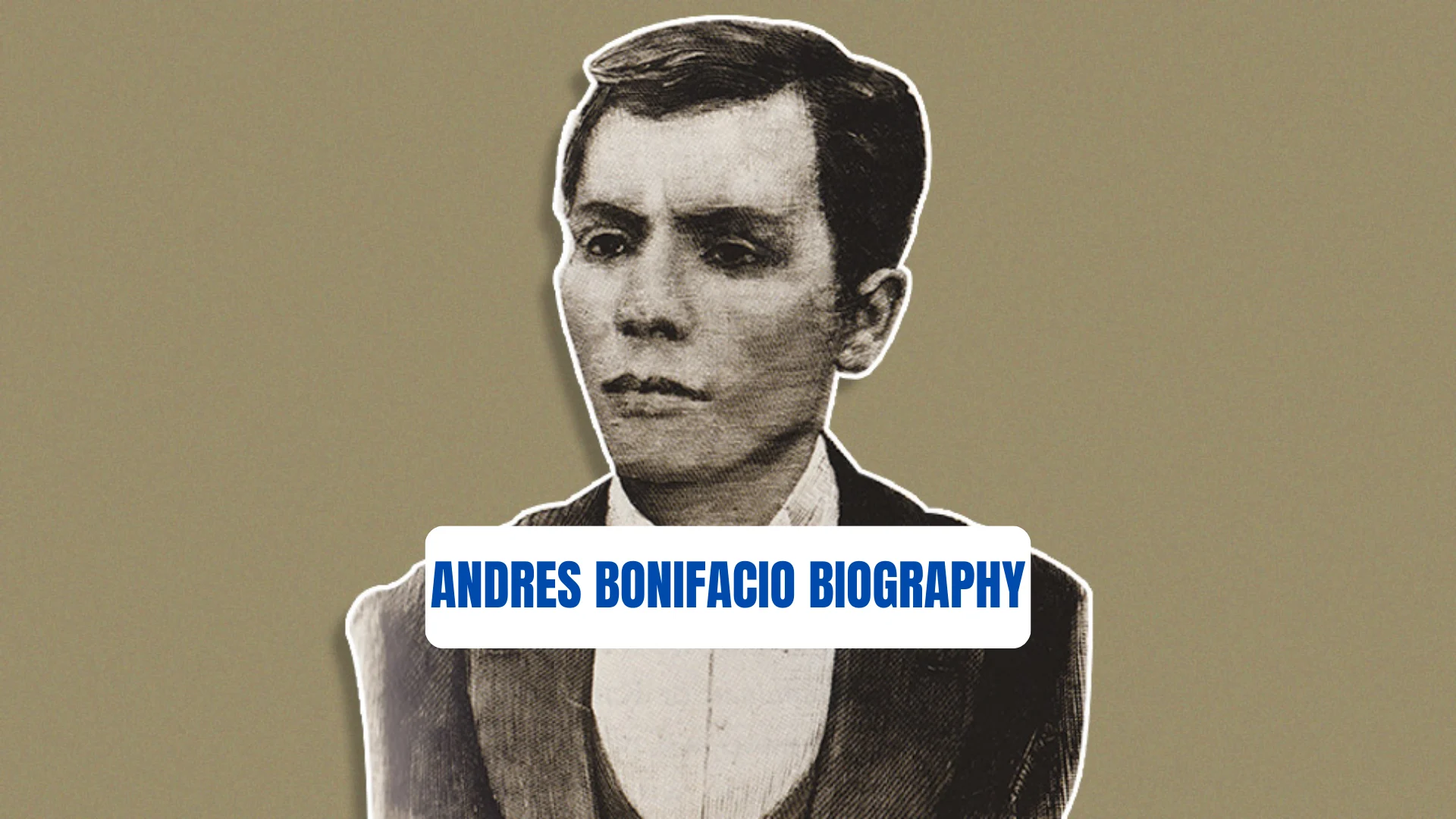
Andrés Bonifacio y de Castro remains one of the most important and inspiring figures in Philippine history. Revered as the Father of the Philippine Revolution, Bonifacio was not a wealthy ilustrado or a formally educated elite, but a self-made revolutionary whose passion for freedom helped ignite the 1896 uprising against Spanish colonial rule. His courage, ideology, and leadership shaped the course of the nation’s struggle for independence.
This comprehensive Andrés Bonifacio biography explores his early life, education, political awakening, formation of the Katipunan, role in the Philippine Revolution, conflicts with fellow revolutionaries, tragic death, and enduring legacy.
Early Life and Family Background
Andrés Bonifacio was born on November 30, 1863, in Tondo, Manila, then part of the Spanish East Indies. He was the eldest of six children born to Santiago Bonifacio, a tailor and boatman, and Catalina de Castro, who worked in a cigarette factory.
Bonifacio’s childhood was marked by hardship. When both his parents died of illness, he was forced to abandon formal schooling to support his younger siblings. He worked as a vendor of fans and canes, a messenger, and later as a clerk. These struggles deeply shaped his worldview and strengthened his empathy for the oppressed Filipino masses.
Education and Self-Learning
Unlike José Rizal and other ilustrados who studied abroad, Andrés Bonifacio had limited formal education. However, he was a voracious reader and a committed self-learner. He educated himself by reading books on:
- The French Revolution
- The lives of revolutionaries
- Political philosophy
- José Rizal’s novels Noli Me Tangere and El Filibusterismo
Through self-study, Bonifacio developed a strong sense of nationalism and a belief that armed revolution, rather than peaceful reform, was necessary to end Spanish tyranny.
Political Awakening and La Liga Filipina
Bonifacio joined La Liga Filipina, a reformist organization founded by José Rizal in 1892. However, Rizal’s arrest and exile to Dapitan shortly after the Liga’s formation convinced Bonifacio that peaceful reform had failed.
This realization marked a turning point. Bonifacio concluded that freedom could only be achieved through revolution, leading him to form a secret revolutionary society dedicated to complete independence from Spain.
Founding of the Katipunan
On July 7, 1892, Andrés Bonifacio founded the Kataas-taasan, Kagalang-galangang Katipunan ng mga Anak ng Bayan, commonly known as the Katipunan. The organization aimed to overthrow Spanish rule through armed struggle and establish an independent Filipino nation.
Bonifacio served as the Supremo (Supreme Leader) of the Katipunan. The group expanded rapidly, especially among workers, peasants, and the urban poor. Its core principles included:
- Love of country
- Equality of all Filipinos
- Resistance to oppression
- Sacrifice for national freedom
The Katipunan used secret codes, rituals, and publications such as Kalayaan to spread revolutionary ideas while evading Spanish authorities.
Role in the Philippine Revolution of 1896
The Philippine Revolution officially began in August 1896, when the Katipunan was discovered by Spanish authorities. Bonifacio and fellow revolutionaries tore their cedulas (residence certificates) in a symbolic act now known as the Cry of Pugad Lawin.
Bonifacio led several early battles against Spanish forces, particularly in Manila and nearby provinces. Although lacking military training and resources, his leadership inspired thousands to join the cause.
Despite initial setbacks, the revolution spread to other regions, notably Cavite, where revolutionary success would later shift the balance of power.
Conflict with Emilio Aguinaldo
As the revolution progressed, internal divisions emerged within the revolutionary movement. Leaders in Cavite, including Emilio Aguinaldo, achieved notable military victories and gained influence.
In 1897, a revolutionary assembly was held at Tejeros, where elections were conducted to establish a new revolutionary government. Aguinaldo was elected president, while Bonifacio was given a lesser role. Feeling disrespected and questioning the legitimacy of the proceedings, Bonifacio declared the results null and void.
This conflict escalated into a power struggle that would have tragic consequences.
Arrest, Trial, and Death
Bonifacio was arrested on charges of treason and sedition against the revolutionary government. After a controversial trial, he and his brother Procopio Bonifacio were sentenced to death.
On May 10, 1897, Andrés Bonifacio was executed in Maragondon, Cavite. He was only 33 years old. His death remains one of the most painful and debated episodes in Philippine history.
Legacy and Historical Significance
Today, Andrés Bonifacio is honored as a national hero of the Philippines. While José Rizal is often regarded as the national hero for his intellectual contributions, Bonifacio is celebrated as the revolutionary who took up arms to fight colonial oppression.
His legacy includes:
- Inspiring mass-based nationalism
- Demonstrating leadership rooted in the common people
- Laying the foundation for Philippine independence
Bonifacio’s image appears on monuments, currency, and stamps, and Bonifacio Day is celebrated annually on November 30.
FAQs About Andrés Bonifacio
Q1: Why is Andrés Bonifacio called the Father of the Philippine Revolution?
Because he founded the Katipunan and led the armed struggle against Spanish colonial rule.
Q2: Was Andrés Bonifacio well educated?
He had limited formal education but was self-taught and widely read.
Q3: How did Andrés Bonifacio die?
He was executed by fellow revolutionaries after being convicted of treason.
Q4: What was the Katipunan?
A secret revolutionary organization aimed at achieving Philippine independence from Spain.
Q5: When is Bonifacio Day celebrated?
Every November 30 in the Philippines.
Conclusion
The biography of Andrés Bonifacio is a story of courage, sacrifice, and unwavering patriotism. From humble beginnings to revolutionary leadership, Bonifacio embodied the struggle of the Filipino masses. Though his life ended tragically, his ideals continue to inspire generations. Andrés Bonifacio remains a symbol of resistance and a reminder that true freedom often demands immense sacrifice.