

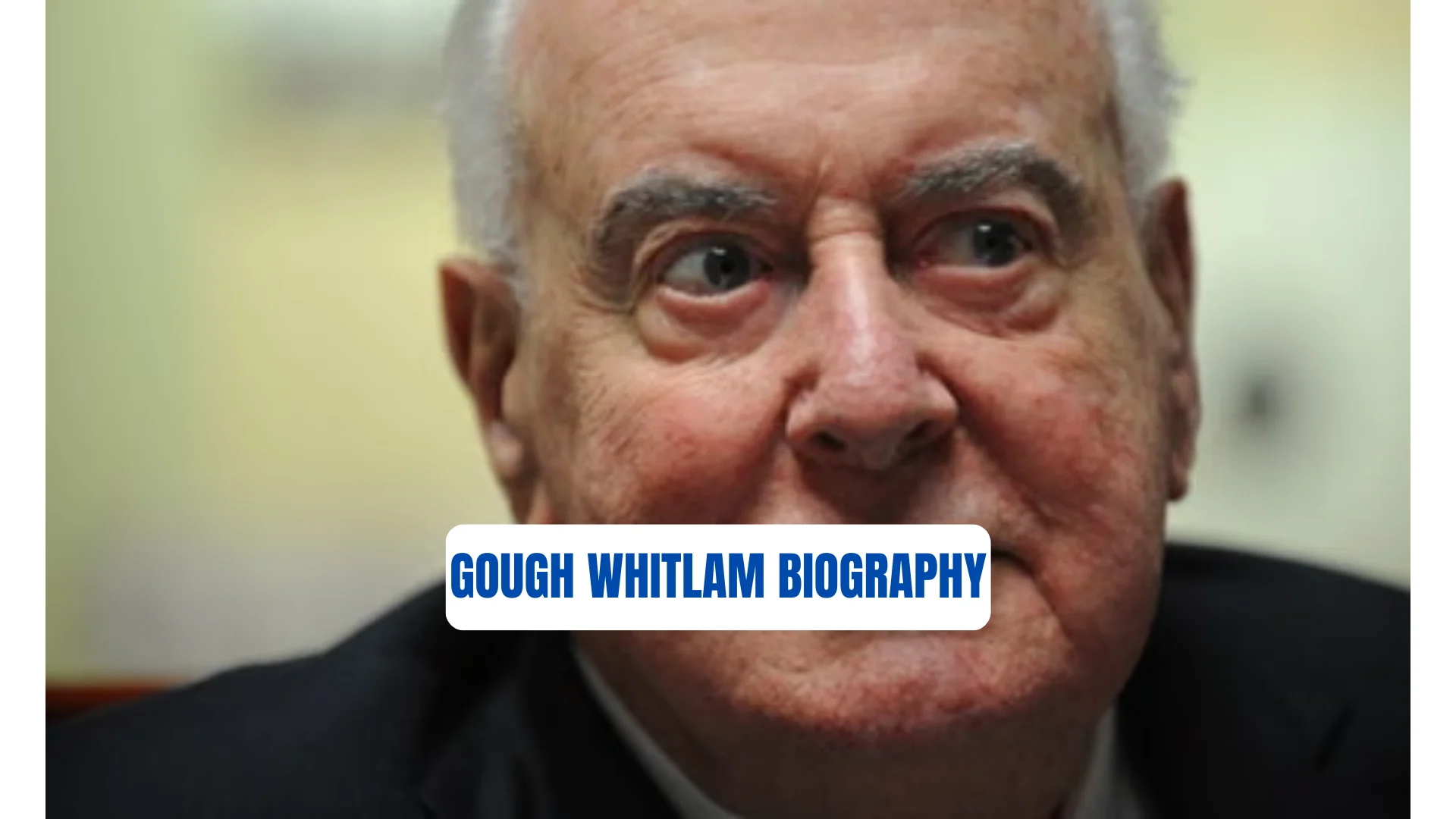
Gough Whitlam was one of the most influential and transformative political leaders in Australian history. Serving as the 21st Prime Minister of Australia from 1972 to 1975, Whitlam reshaped the country’s political, social, and cultural landscape. His government introduced sweeping reforms that continue to shape modern Australia, including universal healthcare foundations, free tertiary education, Indigenous land rights initiatives, and major diplomatic changes.
Although his term was short, Whitlam’s impact was profound. He is remembered as a bold reformer who modernized Australia and challenged long-standing traditions of conservatism and inequality.
Early Life and Background
Edward Gough Whitlam was born on July 11, 1916, in Kew, a suburb of Melbourne, Victoria. He was the son of Martha Maddocks and Fred Whitlam, a senior public servant who served as Crown Solicitor of the Commonwealth. His upbringing exposed him early to law, governance, and public service, shaping his future ambitions.
Whitlam was raised in Canberra, where his father worked in the federal government. This environment provided him with direct exposure to Australia’s political and administrative system. He attended Telopea Park School and later studied at Canberra Grammar School.
In 1934, Whitlam enrolled at the University of Sydney, where he studied law and arts. He was an excellent student and developed strong debating skills. During World War II, he joined the Royal Australian Air Force (RAAF), serving as a navigator and flying officer. His wartime experience broadened his understanding of leadership, international relations, and global responsibility.
After the war, Whitlam completed his law degree and was admitted to the New South Wales Bar in 1947.
Entry into Politics
Whitlam joined the Australian Labor Party (ALP) in 1945, motivated by his belief in social justice, equality, and progressive reform. He was inspired by Labor’s commitment to workers’ rights, education, and national development.
In 1952, he was elected to the House of Representatives as the Member for Werriwa, a seat he would hold for 25 years. His early parliamentary career was marked by his sharp intellect, commanding presence, and ability to articulate progressive ideas with clarity and authority.
Whitlam quickly rose within the Labor Party ranks and became Deputy Leader in 1960. In 1967, he was elected Leader of the Opposition, positioning himself as the face of a renewed and modern Labor Party.
Rebuilding the Labor Party
When Whitlam became leader, the Labor Party had been in opposition for 23 years. He undertook major reforms to modernize the party’s structure, policies, and image.
Key changes included:
- Reducing the power of trade unions in party decision-making
- Promoting merit-based leadership
- Emphasizing national policy over state dominance
- Creating a professional campaign approach
Whitlam’s leadership transformed Labor into a credible alternative government, appealing to middle-class voters, students, professionals, and progressive thinkers.
Becoming Prime Minister
In December 1972, after a historic election victory, Gough Whitlam became Prime Minister. His campaign slogan, “It’s Time,” captured the nation’s desire for change after decades of conservative rule.
Whitlam formed a government committed to social reform, equality, and national independence. His administration moved rapidly, introducing more legislation in its first two years than most previous governments had in decades.
Major Achievements and Reforms
1. Education Reform
One of Whitlam’s most popular reforms was the introduction of free university education in 1974. This policy removed financial barriers and opened higher education to thousands of Australians from working-class backgrounds.
He also expanded funding for schools, improved teacher training, and strengthened early childhood education.
2. Healthcare and Social Welfare
Whitlam laid the foundations for Medicare through Medibank, Australia’s first universal healthcare system. His vision was to ensure that every Australian had access to quality medical care regardless of income.
He also increased funding for hospitals, mental health services, and community health programs.
3. Indigenous Rights
Whitlam made historic progress in Indigenous affairs. He:
- Established the Department of Aboriginal Affairs
- Increased funding for Indigenous education and housing
- Supported land rights initiatives
One of his most iconic moments was in 1975, when he poured soil into the hands of Vincent Lingiari, symbolizing the return of land to the Gurindji people.
4. Foreign Policy and International Relations
Whitlam redefined Australia’s foreign policy by:
- Recognizing the People’s Republic of China
- Reducing reliance on Britain and strengthening ties with Asia
- Opposing apartheid in South Africa
- Supporting independence movements in the Pacific
His approach emphasized Australia’s independence and regional leadership.
5. Cultural Development
Whitlam believed culture was essential to national identity. He established:
- The Australia Council for the Arts
- Increased funding for film, theatre, and literature
- Support for Australian artists and creatives
These policies sparked a cultural renaissance that shaped modern Australian arts.
6. Legal and Social Reforms
Whitlam’s government:
- Abolished the death penalty for federal crimes
- Passed laws for equal pay for women
- Introduced no-fault divorce
- Expanded legal aid services
These reforms advanced human rights and social equality.
Economic Challenges and Controversies
Despite his achievements, Whitlam’s government faced significant challenges. The global oil crisis of the 1970s led to inflation and economic instability. Rising government spending alarmed conservatives and financial institutions.
The most damaging controversy was the “Loans Affair,” where the government sought unconventional overseas loans to fund national development projects. This scandal undermined public trust and weakened Whitlam’s political standing.
The 1975 Constitutional Crisis
The most dramatic moment of Whitlam’s career came in November 1975. The opposition-controlled Senate blocked the government’s budget, creating a constitutional deadlock.
On November 11, 1975, Governor-General Sir John Kerr dismissed Gough Whitlam as Prime Minister and appointed Malcolm Fraser as caretaker Prime Minister.
This remains the most controversial event in Australian political history. Whitlam’s famous words:
“Well may we say God save the Queen, because nothing will save the Governor-General.”
still resonate today.
Later Life and Legacy
After losing the 1975 election, Whitlam remained Leader of the Opposition until 1977. He later served as Australia’s ambassador to UNESCO and continued to influence public debate through writing and speaking.
Gough Whitlam passed away on October 21, 2014, at the age of 98. He was honored as one of Australia’s greatest reformers.
Why Gough Whitlam Still Matters
Whitlam’s legacy is visible in:
- Universal healthcare
- Free access to education
- Indigenous land rights recognition
- Cultural funding
- Independent foreign policy
He modernized Australia and brought it into the contemporary world.
FAQs
Q1: Who was Gough Whitlam?
Gough Whitlam was the 21st Prime Minister of Australia and a major reformist leader.
Q2: When was Gough Whitlam Prime Minister?
He served from 1972 to 1975.
Q3: What was Gough Whitlam famous for?
For introducing free education, healthcare reforms, Indigenous rights initiatives, and cultural development.
Q4: Why was Gough Whitlam dismissed?
He was dismissed due to a constitutional crisis involving the blocked budget and the Governor-General’s intervention.
Q5: What is Whitlam’s greatest legacy?
Modernizing Australia’s social, political, and cultural systems.
Conclusion
Gough Whitlam remains a towering figure in Australian history. His bold vision, fearless reforms, and commitment to equality transformed the nation. Though his government ended controversially, his legacy continues to shape Australia’s identity as a progressive and inclusive society. He was not just a Prime Minister; he was a nation-builder who dared to imagine a better Australia.